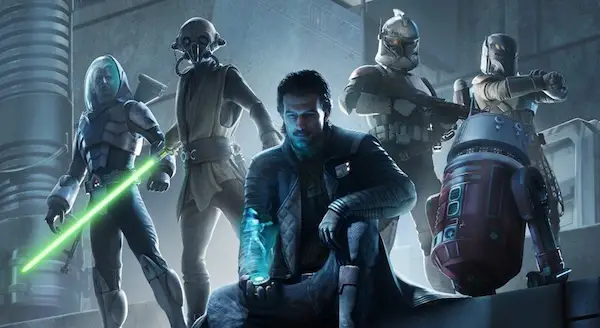
Star Wars Zero Company has crossed an estimated one million copies sold in under a month, according to analytics firm Alinea Analytics, generating roughly $50 million in revenue since its August 27 launch.
The platform split is the genuinely interesting part. Analyst Rhys Elliott put Steam at 69.9 percent of total sales, with PlayStation at 19.9 percent and Xbox — including Xbox PC — at just 10.2 percent.
For a Star Wars game, that is an unusual distribution. For a turn-based tactics game built by former XCOM developers, it is exactly what you would expect. The audience for this genre lives on PC, and it turns out the Star Wars logo on the box did not change that.
Elliott described the $50 million figure as respectable for the genre in a crowded release window, even with the Star Wars brand attached. Respectable is doing some work in that sentence. It is not a disaster and it is not a phenomenon.
Consoles Punch Above Their Weight
One number worth pulling out: while consoles account for only 30.1 percent of copies sold, they contributed roughly 40.1 percent of revenue — about 26.7 percent from PlayStation and 13.3 percent from Xbox.
That gap comes down to pricing. Console versions sell at a higher average price than Steam copies, particularly once regional pricing is factored in. So the PS5 and Xbox audience is smaller but considerably more valuable per player.
Peak concurrent players across all platforms cleared 340,000, and the game reportedly pulled in around $30 million in its first week alone.
Who Is Actually Playing It
The player overlap data tells you something about how Zero Company found its audience.
On Steam, roughly 28 percent of Zero Company players have also played XCOM 2, and about 32 percent have played Star Wars: The Old Republic. On consoles, the overlap skews heavily toward Star Wars Jedi: Fallen Order.
In other words, PC players came for the tactics and console players came for the Star Wars. Which, given that Fallen Order’s narrative director wrote this game too, is a reasonable instinct on the console side.
The Ceiling Nobody Talks About
Alinea flagged a real limitation: around 90 percent of Zero Company players are in North America or Europe, with under 5 percent in Asia.
Some of that is the known ceiling on Star Wars as a brand outside Western markets. But some of it is self-inflicted. Chinese user reviews on Steam sit at 57 percent positive against an 82 percent global average, with the absence of voice-over and localization options cited repeatedly as the reason.
That is a fixable problem, and it is worth noting that the game is priced at $50 rather than the $80 we are increasingly being asked to swallow. A million copies with better localization support might have been a meaningfully bigger number.
The Part That Does Not Sit Right
Here is the context that makes this story more complicated than a sales milestone.
Bit Reactor reportedly furloughed around 80 percent of its staff shortly before Zero Company shipped, and has been operating with a skeleton crew since. That is why it took two weeks to patch fundamental issues like shots missing at a displayed 100 percent chance to hit.
So the studio’s debut game reviewed at 86 on Metacritic, holds 83 percent positive on Steam, has been called the highest-rated Star Wars game in over two decades, and sold a million copies in a month — and most of the people who made it were sent home without pay before launch day.
EA has not confirmed any of these figures, and now that the company has gone private it is under no obligation to report them. And let’s be real — this is EA we’re talking about. The same publisher whose Battlefront II loot box defense became the most downvoted comment in Reddit history and got actual legislators interested in whether Star Wars was running a casino for kids. So the Alinea estimate is likely the closest thing to a public number we are going to get.
Why I’m Playing It Again
For what it is worth, I am part of the console 19.9 percent, and I am currently on my second run.
That is not something I do often. But Zero Company is built in a way that makes a second playthrough genuinely different rather than just faster, and I wanted to test that directly. So this time I am bumping the difficulty up and deliberately making different choices at the forks — backing the operators I turned down last time, taking the paths I skipped, and seeing what the campaign looks like from the other side of decisions I have already made once.
Having written a whole guide about the decisions in this game you cannot take back, it feels only fair to go back and take some of them differently.
Early impression: it is working. The Dilemmas play out differently, the roster composition changes what is available to me, and the harder difficulty has stripped out the margin for error I had leaned on without realizing it. This is not a New Game Plus victory lap. It is a different campaign.
Which is probably the most meaningful thing I can say about a million-copy sales figure. The number tells you people bought it. The fact that I am voluntarily doing the whole thing again tells you something else.